

Have you ever stopped to think about how we got our name? I mean, let’s assume you live in a city with a name that’s relatively not confusing, I’m willing to bet you haven’t given it more than thirty seconds worth of thought. Green Bay? Pretty simple to understand that one (although it IS trickier than you might think, but we’ll talk about that a different day). Madison? Doesn’t take a rocket scientist to figure out how that got its name. Even cities like Oshkosh and Milwaukee, with their native backgrounds make sense. And of course we have plenty of cities with a French inspiration, such as La Crosse and Prairie du Sac, which can be understood with some basic French language skills. However, the big one still looms… Wisconsin. Those of you out there that have been interested enough to do even the slightest amount of research know it has something to do with the river. But then that begs the question, where did the river get its name from? And who even gave it that name? Is it Native American? Is it French? Sit back, crack open a beer from your closest local brewery, and put your feet up… I got you covered! This post will cover all you could ever hope to know, and then some. In fact by the end you’re going to be begging me to shut up.
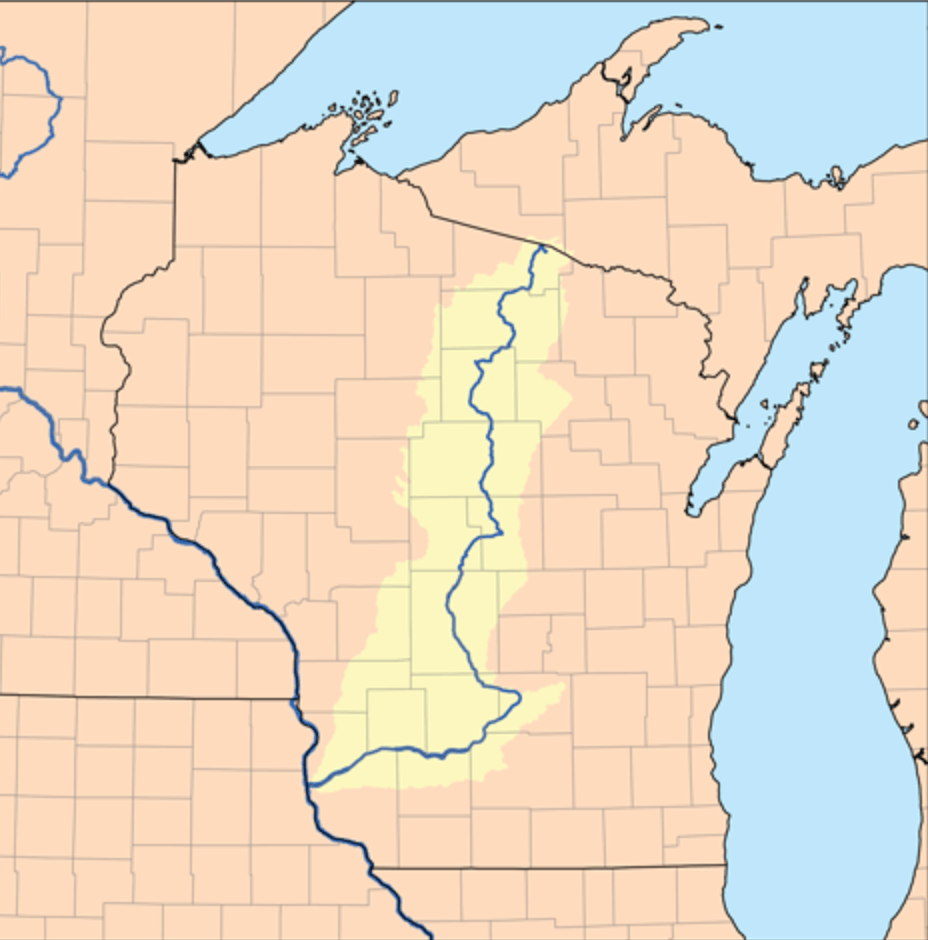
When it comes to the history of how and why we call it ‘Wisconsin’, there are very few concrete details that historians can agree on. The lone simple fact that does seem to reign true across all accounts is that Wisconsin is indeed derived from the name of the river. Let’s go back in time to 1673, and use that as a starting point. The tribes in the state that were in communication with the frenchman Jacques Marquette as he explored the waterway from Green Bay to the Mississippi seem to be where we get our first time hearing the name… sort of.
Marquette and Louis Joliet had been transversing this state via the Fox and Wisconsin Rivers, and after staying with a group of Miami, Kickapoo, and Mascouten, Marquette wrote in his journal that the river they were traveling on was called the “Miscousing”. Whether or not every tribe called it that, or a variation of that, is unknown, but as fate would have it, Marquette and Joliet heard that name, and that is what stuck. One more journal entry has Marquette using a variation of that name (Miskous), and a later 1674 map made by Joliet has ‘Miskonsing’ as the name-sake, followed by a book telling the journeys of Marquette and Joliet, also using the name “Mescousin” River in 1681.
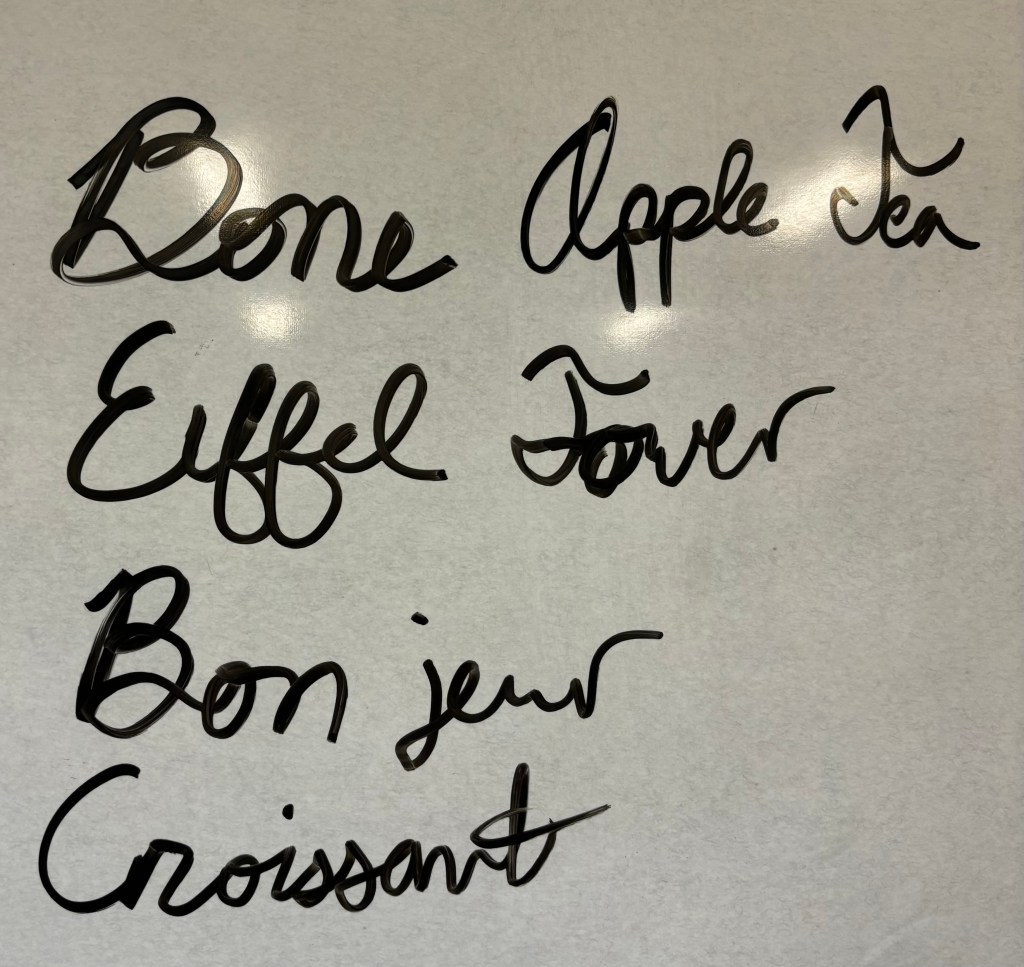
So, now that the name is established, why the heck did the M change to a W? I think we can all agree we have the better letter currently. I mean, can you imagine your local university having a capital ‘M’ as your logo, instead of a nice, classic W? GROSS!!! Anyways, as with most things, the French screwed up, yet again (I kid I kid… the French are going to be an easy scapegoat for me though whenever a Wisconsin history post comes up). I don’t know about you, but one of the things I really struggle with when looking at historical documents is trying to translate it. I like to consider myself a history buff so I do enjoy looking through that type of thing, but I don’t mean translation in the sense from a foreign language to the English language, I’m talking strictly the English language, in which I am completely fluent. Before the old-heads come at me talking about cursive, newsflash, I’m in my upper 30’s… I can both read and write cursive. So why the difficulty translating those old documents? They’re sloppy!! They didn’t have the greatest handwriting, and man is it frustrating. I am also confident I am not alone in that regard, and as it turned out, quite a few early Frenchmen probably agreed with me given the circumstances of our now-named state. A cursive, capitalized ‘M’ from a sloppy writer is actually the best reason for us having a W in our name.

As it would be, a cursive M when written in haste can end up looking like an “Ou” in the right circumstances, and that is exactly what happened. Another French explorer by the name of Rene Robert Cavalier, sieur de La Salle misinterpreted said name of the river, and from that point on Mescousin became “Ouisconsin” (produced Wisconsin, or Wesconsin) and the rest is history. The next century and a half saw the M fade out of existence, and Ouisconsin became the new correct spelling. Fast forward to the 1800’s, when Americans started to inhabit the southwestern portion of the state in order to mine, and the “Ou” morphed into the English pronunciation of a W, and here we are.
Lastly, I feel like we should address why it was given that name in the first place. Historians, after interviewing members from several tribes what the word “Miskonsing/Mesckousing/Mescousin” might mean in their language, realized no two tribes were really saying the same thing. Not very promising when trying to figure out why we are called what we are called. Answers ranged from “gathering of the waters”, “gathering, having many tributaries”, and “red land”, to “holes in the banks of a stream in which birds nest”, “wild rushing channel”, and my personal favorite “muskrat house”.
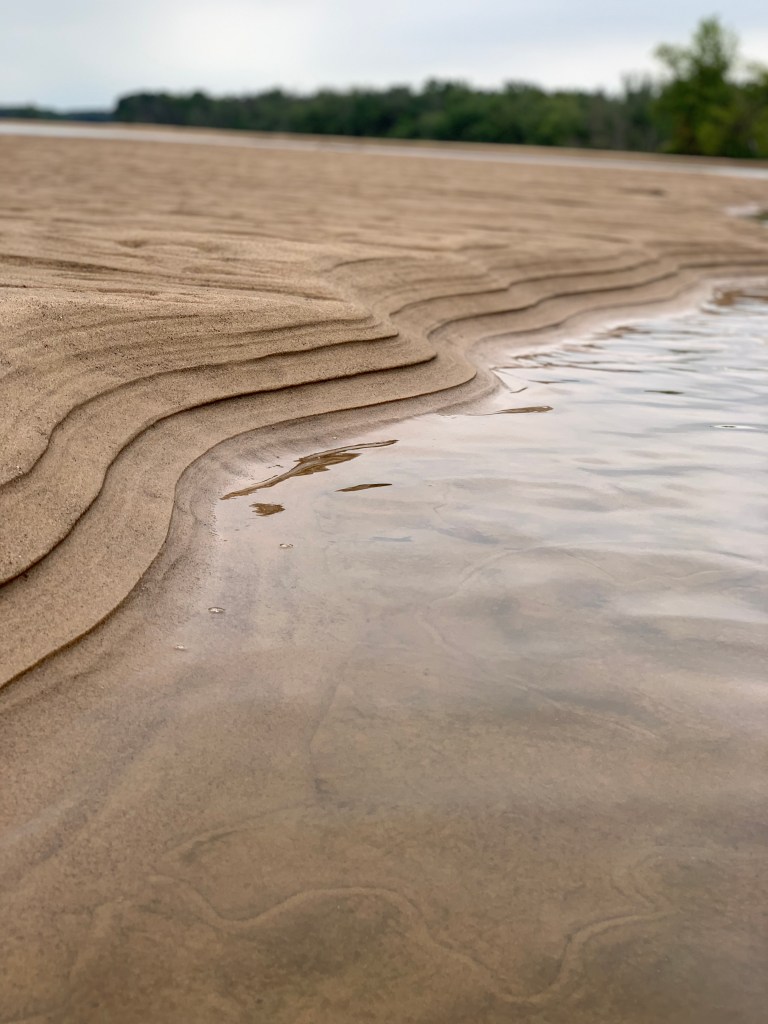
All these names and no consensus is not good for business, and so eventually our savior would arrive in 2005. Michael McCafferty, a Native American language specialist at the University of Indiana proposed the meaning of “it lies red” in the newly extinct Miami-Illinois language. In those Miami tribes, naming a place after the most striking features was very common, and red sandstone that makes up a large chunk of Wisconsin River shoreline. This is now the meaning that will most likely stick for the rest of time, unless new evidence comes about, which seems unlikely. Remember, Marquette himself got the name from the Miami, who moved out of Wisconsin shortly after their introduction to the French, and in a sad twist of fate, the last native speakers of their language died in the 1960’s. (Quick aside here… that’s actually legit sad, the extinction of a language. Cultures and languages all over the world are going extinct and at alarming rates to boot. In my opinion, it is in humanity’s best interests to preserve these cultures… for any anthropologists that read this, any chance you can comment below on some ways we can save these??) So with no more native speakers, and no more members from that tribe in the area, we would need to find some extraordinary evidence to contradict the current nomenclature.
So, there you have it… what Wisconsin means, and why we are called that. Just imagine, if the French were neater writers, we might still be called Miscousing, and, have a big ugly M as our logo… YUCK! All info from this post was obtained through three main sources: The Wisconsin Historical Society, “Place Names of Wisconsin” by Edward Callary, and “Wisconsin: A History” by Robert C. Nesbit. I highly recommend all three sources for all of your Wisconsin needs by the way.

 Life is Too Short to Take the Fast Way
Very informative!
LikeLike