
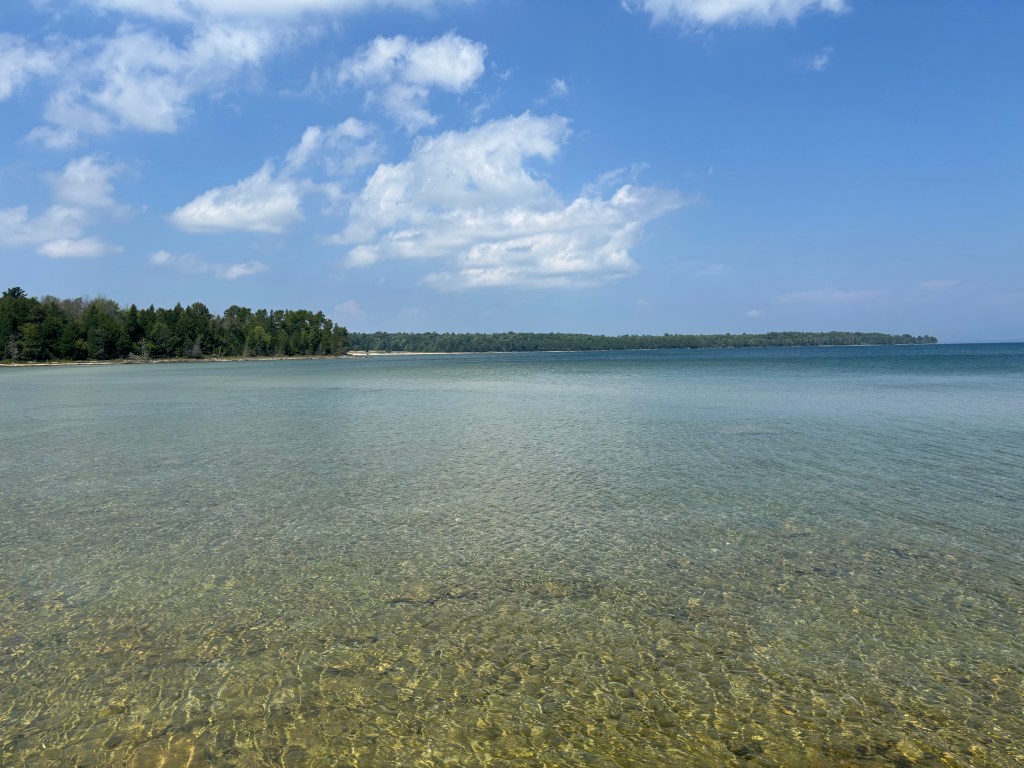
One of the reasons that makes Door County so special isn’t the retail aspect, but rather the nature and beautiful landscapes within the peninsula. With 5 state parks to boast (should be 6, and several of them should be larger), they are all certainly unique enough to justify their status, but they were all largely formed in the same way. Both the Sturgeon Bay and Rock Island posts are a great crash course into their formations. With Newport forming largely the same way as them, we don’t really need to spend too much time on its geography. So we’ll do a (very) quick recap below and instead focus a bit more on the historical aspect of this great park.

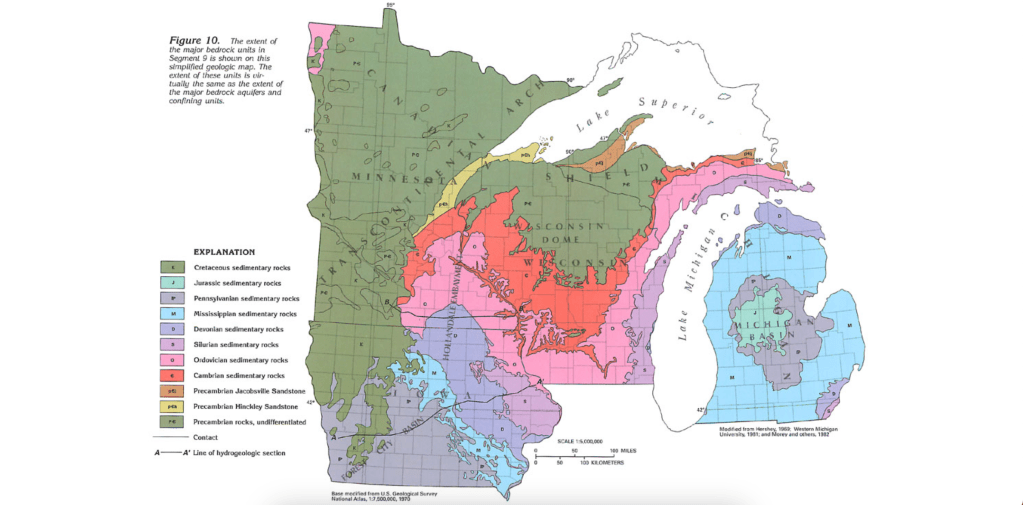
If you recall (and for those of you that just don’t want to read the other posts), Door County itself was formed into its most current state during the last ice age, with the most recent glaciation ending about 10,000 years ago. During this time, the great lakes themselves were finished being carved out, including Green Bay (the body of water, not the city). Due to the underlying rock of the peninsula, most of it wasn’t fully decimated, thus the existence of the peninsula in the first place. The peninsula is an entirely different rock from the bulk of the rest of the state, hence the carved out bay in between the mainland and peninsula. The rock that makes up the peninsula is part of the larger Niagara Escarpment (which, as its namesake suggests ends at the current Niagara Falls), and when you look closer into its topography and elevation, is steeper towards the bay side of the peninsula and gradually slopes down to the flatter, Lake Michigan side. Which brings us to Newports location… on the flatter, eastern edge of the peninsula.

Because of Newports location, the park itself is relatively level and flat. Some elevation change, but not that much, and when compared to the two western parks in Door County (Potawatomie and Peninsula), it’s a very stark contrast in elevation changes throughout. In fact when you compare it strictly to Peninsula State Park, it’s crazy to think they’re located that close to each other geographically given the differences in topography and terrain. This makes it one of the easier parks in Door County from a hiking standpoint which is great news for everyone.

With the geographical aspect covered, the history should be addressed as it comes with a twist. Originally a logging town (Newport), the history of Newport ended just as abruptly as the logging industry that supported it. No caution was taken to the profession back then, and soon the forests were all depleted. From here, an unlikely hero emerges. Believe it or not, someone from Illinois steps up at this point for our salvation. Ferdinand Hotz in 1919 purchased the land that would become Newport State Park due to his hatred for how Wisconsin forests had been cleared in the lumber industry. He wanted to protect the land and restore it to its previous state. The state of Wisconsin purchased the land from his estate in 1966 and 11 years later made it into a wilderness park, which as we talked about last post, severely limits construction and development. By 1978, it was fully integrated in its current size and area as Newport State Park. So yes, despite our hatred of our neighbors to the south, a German immigrant-turned-Chicagoan ends up inadvertantly gifting us a great state park with beautiful scenery and unique features. Thanks, I guess? All info for this post was obtained from my brain (a few things) and from “Wisconsin State Parks: Extraordinary Stories of Geology and Natural History” by Scott Spoolman (most things). In fact, if you enjoy geology, natural history, ecology, etc. of our state, this book is a MUST. And it contains way more info on Newport (and the rest of the parks) than I provided here. Pick up a copy at your leisure and enjoy!

 Life is Too Short to Take the Fast Way