

De Pere was formed in 1890. Well, technically 1836. Actually, make that 1829. On second thought, make that pre-1600’s. Let’s just say it’s complicated, but for good reason. First of all, your definition when a city is founded can get muddled. The modern day city of De Pere was finally at it’s near-modern day borders in 1890. But 1836 is when the first town plat was drawn up. However, 1829 is when the first permanent settlers had existed in the area, making it a town in all but official government lingo. But even prior to that, for most likely hundreds of years, it was the site of a semi-permanent settlement used by various Indian tribes for the great fishing. The exact year is less important, but it’s significance due to it’s location makes De Pere one very interesting city. Let’s dig in.
While De Pere might be smaller than Green Bay, it is no less interesting and definitely worthy of it’s own reputation as an awesome city to visit. Aside from Green Bay, most of Wisconsin’s earliest towns were in the southern portion of the state. Due to the industries of the 1700’s into the early 1800’s, there wasn’t much of a need for cities in the northern half. Mining and trading along the Mississippi River were the focus for the state, and the state was too forested to do either of those once you made your way past hwys 23 and 82. But being on the Fox River had its own set of advantages. The natives at the time, as well as the more seasoned French traders knew it, and it was only a matter of time until the settlers figured it out too.

From a trading and travel perspective, the Great Lakes region is one of the most important parts of this country. Cleveland, Detroit, Chicago, and Milwaukee all got their start due to their advantageous locations on the Great Lakes. Green Bay’s fort also had the benefit of location, but due to the peninsula of Door County, was less of an economic powerhouse as the others. The Fox River though was key to one of the most important progressions westward… the Mississippi River. From the Fox, you can paddle your way to Portage, WI. A quick hop, skip, and a jump, and you’ve made your way to the Wisconsin River. We’ll do a future post on this extremely important piece of Wisconsin’s history in the future, but the main lesson here is that any city on the Fox River owes it’s existence and success to the Fox River itself.
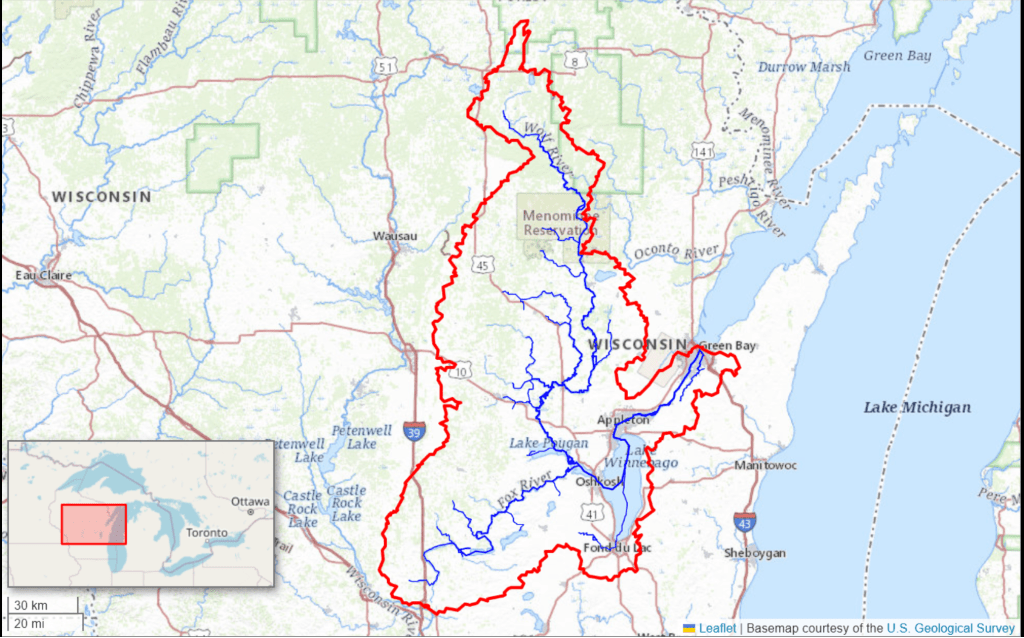
De Pere is the third oldest city in our state in the northern half. 11th oldest overall, but Green Bay, La Pointe, and De Pere were the only three cities north of Portage, WI in the early 1800’s. Both Green Bay and La Pointe initially started off as forts for the French, but De Pere was the first true “northern” settlement to be established as a city instead of a fort. As mentioned above, the Fox River played a historically important role in our state, but the location of De Pere was more than just strategically important from a travel perspective. The natural rapids on the Fox at the site of the area a necessity for successful fishing.

Before the Fox River was dammed in order to make travel and factory power easier, there were several rapids within the river. The very last set of rapids before the Fox entered into the bay was the site of a semi-permanent settlement of many different Indian tribes, and was used for its great fishing. In 1634, Jean Nicolet arrived to this exact location, and used the term “polyglot”, meaning many different languages were spoken. Then in 1671 Father Claude-Jean Allouez (the namesake of the town immediately to the north of De Pere on the east side of the river) founded the St. Francis Xavier Mission. This site was now called Rapides Des Pères meaning “rapids of the fathers”, which would then eventually become De Pere.
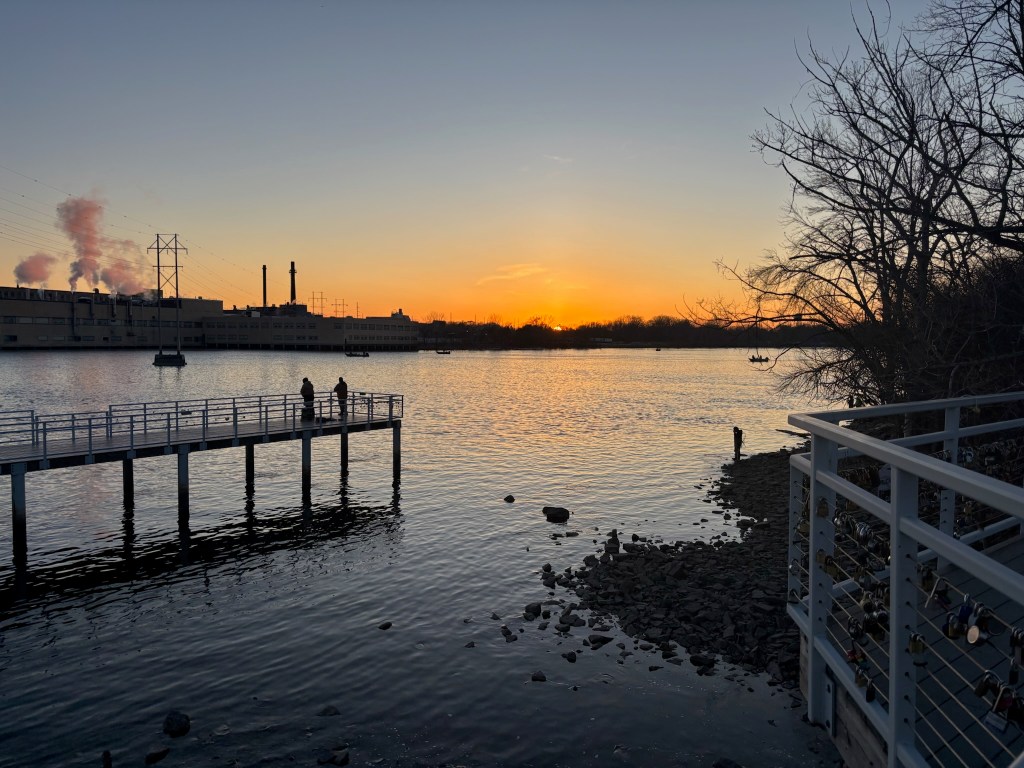
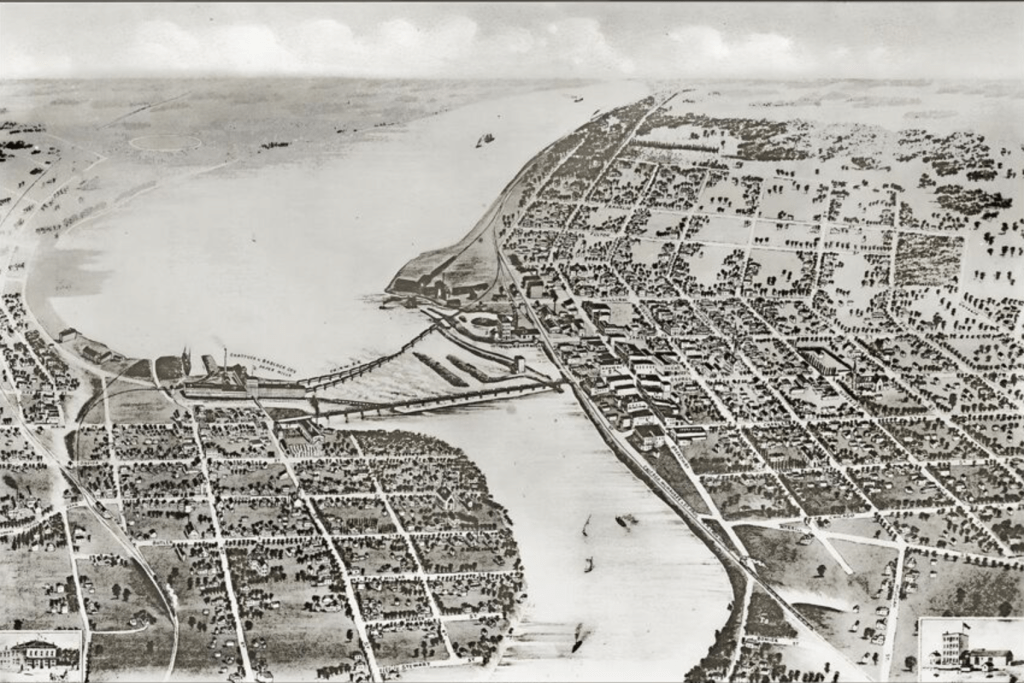
As far as De Pere as a modern city, the first permanent settlers occupied De Pere in 1829. In 1836 the De Pere Hydraulic Company drew up the first plat of the town. It went through various iterations of sizes and names, but mainly stuck around the site of the rapids. The town of Howard would be on the western shore while the area south of De Pere was called Mason. The president of the De Pere Hydraulic Company, Randall Wilcox, named a majority of the town Wilcox, after himself, before eventually, in 1839, being officially named De Pere. From that point on, the city grew slowly, first incorporating parts of Howard (modern day West De Pere), then parts of modern day Ledgeview, the village of De Pere (different than the city), Nicolet (West De Pere again), the city of West De Pere (1887) and FINALLY, in 1890, West De Pere and De Pere consolidated into one city, the city of De Pere.
So there you have it, a rushed but concise history of De Pere. It always has been more than just a suburb of Green Bay, and always will be. The next time you’re able to visit the area, give this city a shot, and explore some of the cool history the region has to offer. You won’t regret it. All information for todays post was found in “De Pere of Yesteryear” by Mary Kay Milquet, and The Wisconsin Historical Society.

 Life is Too Short to Take the Fast Way