
Part 1: The Facts and the Exptirpation
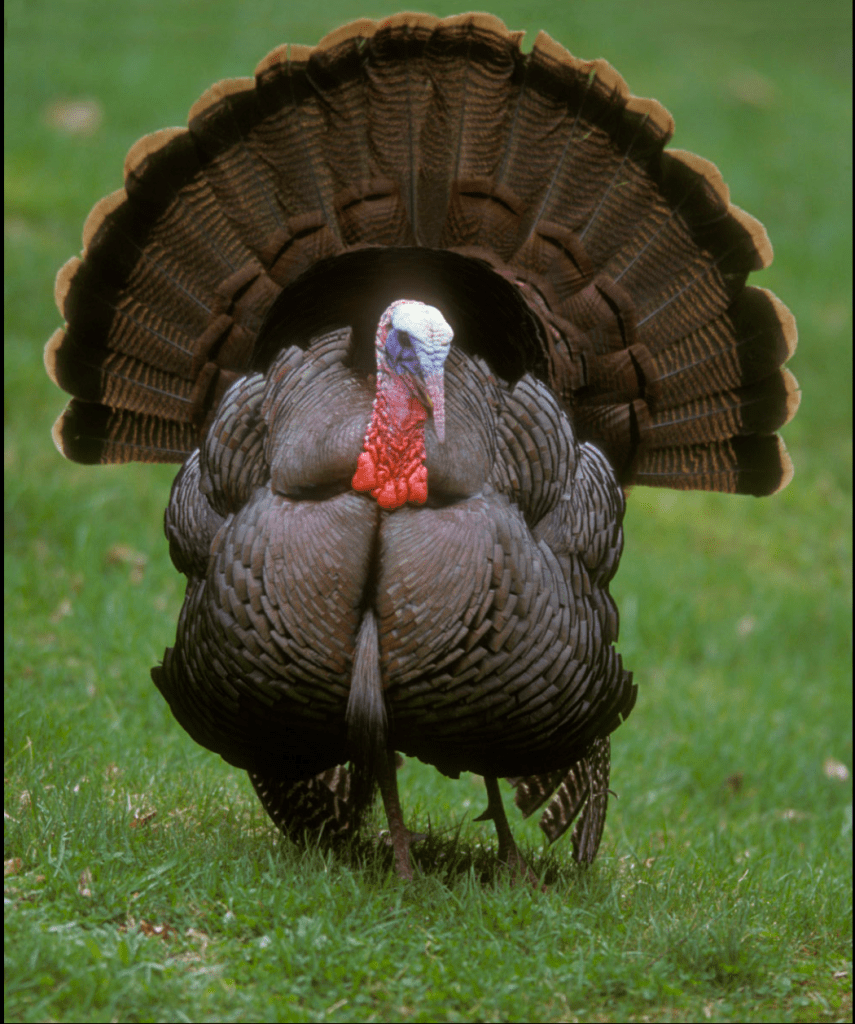
Wisconsin is known for a lot of things, but one of my favorite things we’re known for is our natural resources. Whether that’s our forests, prairies, lakes, wildlife, and anything in between, Wisconsin has a good reputation for nature. But it wasn’t always that way. We’re certainly no different than any other state, but the way things were handled as this nation was forming was less than ideal. Almost all of Wisconsin was clear cut in varying stages to make way for farmland or profit. We hunted many animals to extirpation (extinction in our area). We destroyed prairies and filled in the wetlands. We’ve since learned the error of our ways, but that doesn’t mean there haven’t been repercussions, lingering or otherwise. You might take it for granted that you’re able to see turkeys in farm fields on some of your longer drives, but this wasn’t always the case. The Wild Turkey is indeed native to Wisconsin, but at one point they were completely eliminated. In today’s post we’ll cover some interesting information about the turkey you might not have known, and we’ll cover their downfall. Next week we’ll talk about their successful recovery.
Whether you’re a hunter or not, the successful reintroduction of the Wild Turkey back into Wisconsin is a good news story all around. If you are a hunter the turkeys are fun to hunt, it adds a spring game season when almost all other hunting seasons take place in fall, and it provides delicious healthy meat for your table. I am not as big of a hunter as I’d like to be, but the one time I did go out turkey hunting with a friend was one of the coolest hunting experiences I’ve ever had. The entire week was terrible for hunting… cold and (very) windy all week, rain and snow almost every day, but we did manage to get out for one good day of hunting. And I’ll never forget hearing the sounds of the turkeys echoing throughout the forest. So close yet so far away, the noise they made in those early morning hours just after sunrise while the fog still lingered is etched in my memory for eternity. They never got close enough for me to get a shot, but I was content with the experience nonetheless. The spring months for me now are dominated by coaching so turkey hunting isn’t in my immediate future, but I’m hopeful one day down the road.
If you aren’t a hunter, the turkey coming back is still great. They are part of a healthy ecosystem, and our state is better for having them back. Berry bushes, oak trees, and other wildflowers are among some of their favorite herbivorous foods, and eating those fruits and seeds mean their subsequent droppings far away from their source ensure seeds get deposited throughout the entire forest. If there are insects to be found you can be sure a turkey will be eating them too, keeping those pesky bugs in manageable numbers. They are true omnivores necessary to the food web. They are hunted by eagles, hawks, owls, and other birds of prey when they are in their younger stages. When they get a bit larger, they are still food for bobcats, coyotes, mountain lions, and foxes. When they are in the nest unhatched, they are a delicacey for raccoons, foxes, groundhogs, snakes, skunks, and other rodents. If you have the luxury of seeing or hearing a turkey in a wild area, you can be rest assured the ecosystem is doing better than not.
Even if you’re not into all that ecology mumbo jumbo (you should be), hearing one in the woods is enough of a reason to keep them around, and before you start telling me that hearing a turkey gobble adds no value, I want you to consider what goes through your mind when you hear a loon call as the sun sets in the northwoods, or a Barred Owl calling in the early morning hours when you’ve got the dog out for a walk. Hearing a crane when you’re near the marsh, or even a couple of coyotes off in the distance… the sounds of nature are enough to boost the soul, and if you’re downplaying any of these instances I’m describing, you need to get out and experience Wisconsin and its nature more.
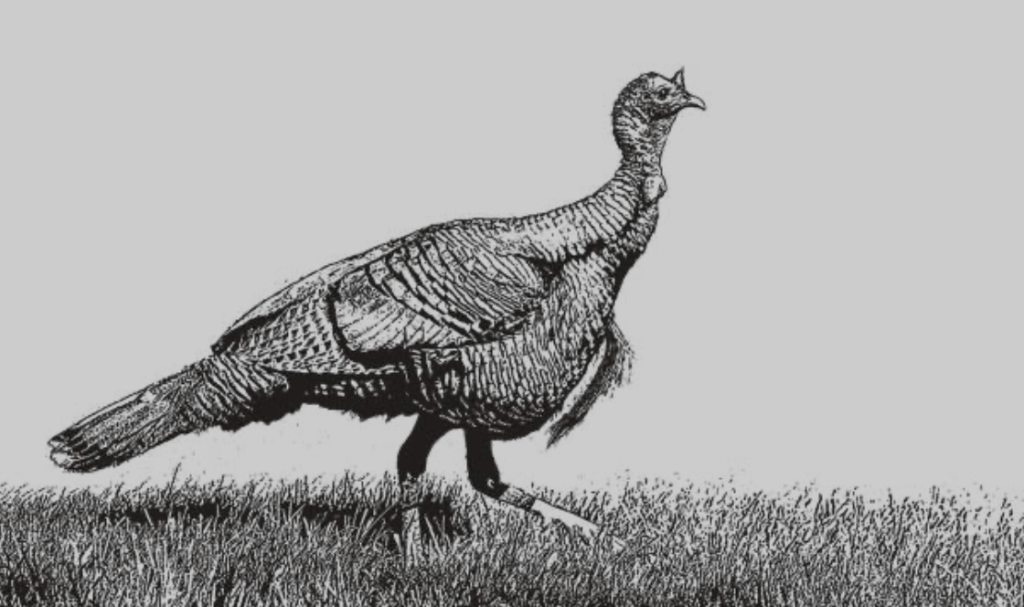
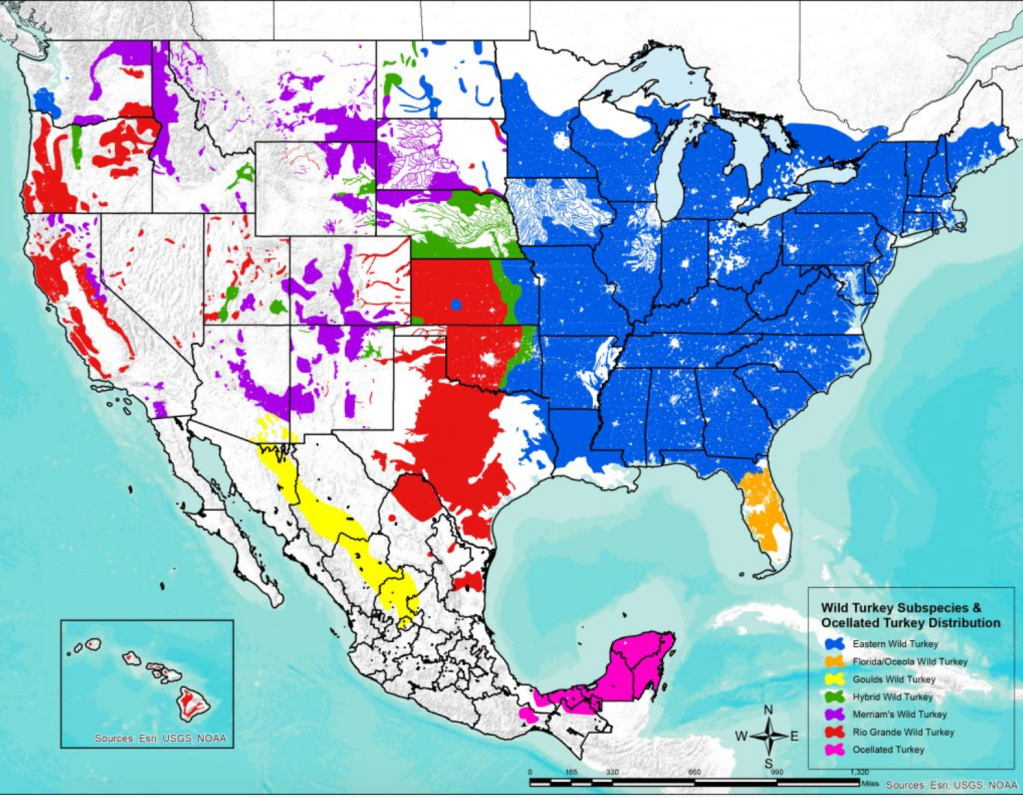
North America is home to two turkey species, the Wild Turkey (yes, that’s the actual common name) and the Ocellated Turkey. While the Ocellated Turkey can only be found in the Yucatán Peninsula of Mexico, the Wild Turkey can be found in the eastern two thirds of the lower 48 as well as some pockets in the American SW/Mexican deserts and some mountainous areas in California, Oregon, Washington, and even Idaho. There are 5 subspecies of the Wild Turkey and of those 5 the Eastern Wild Turkey, which is the subspecies we have here in Wisconsin, is the most widely distributed.
When Europeans first came over to North America there were probably around 10 million turkeys, but by the early 1900’s only around 30,000 remained. Luckily, they weren’t wiped out entirely. The Everglades and the Ozarks were two locations they still thrived and would go on to help the entire species make a miracle recovery. With Wisconsin originally being home to the Eastern Wild Turkey, and Florida having only the Florida/Osceola Wild Turkey, Missouri played a key role in helping us out (more on that next week).
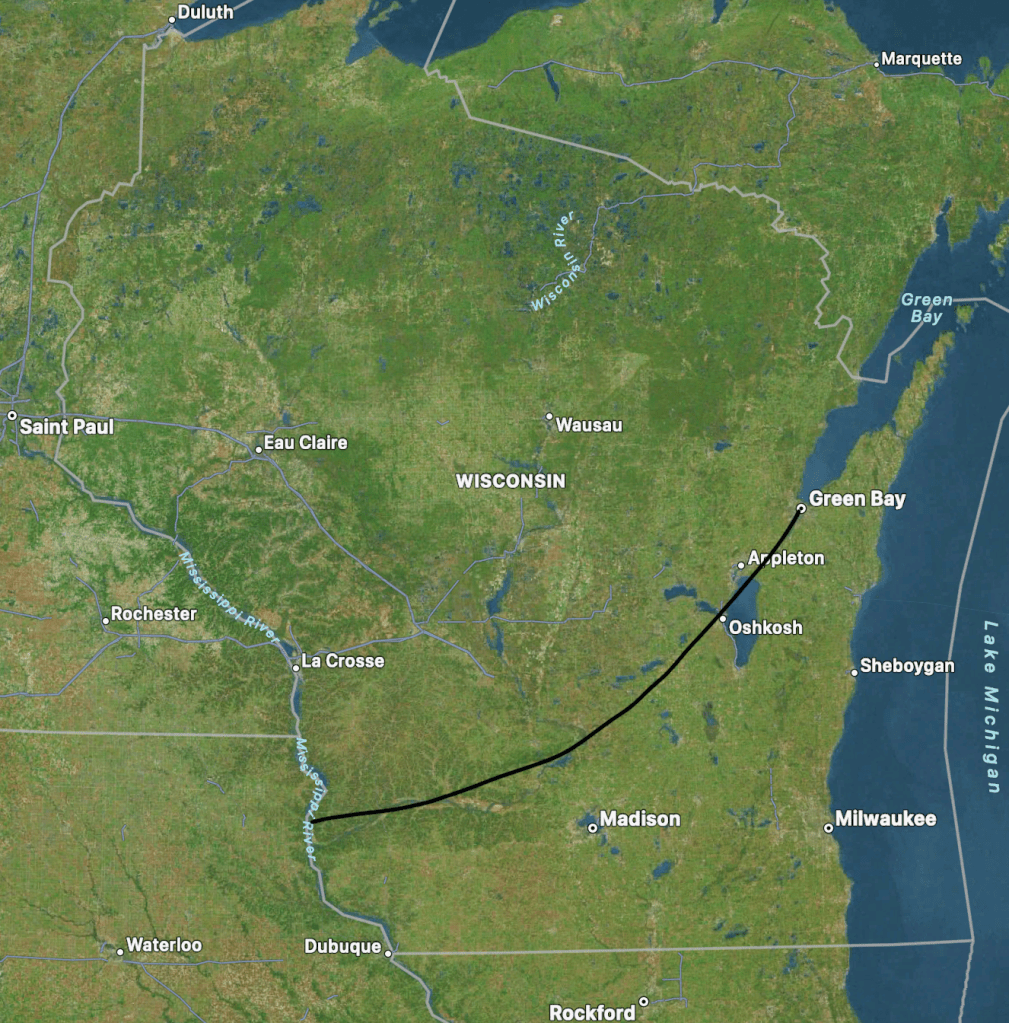
As for Wisconsin, if you drew a rough line from Green Bay to Prairie du Chien you’d have their natural boundary at the time of the European settlement. Turkeys prefer an almost even mix of open and forested areas and in the 1700’s and prior, when you start to go north of that imaginary line, you got almost exclusively forested land with less and less open fields. That is however until Wisconsin started to become settled. When expansion came for Wisconsin, farming and agriculture became priority number one when the mining didn’t pan out. With the southern half of Wisconsin having ideal farm land, plot after plot was set up, removing more and more of the natural land. Timber stands were clear cut en-masse throughout the entirety of the state. Of course the turkeys didn’t disappear due to habitat loss exclusively. Overhunting and unregulated hunting played just as large of a roll. With no regulations on what animals could be hunted when, and no limits, Wisconsin wild game were basically living in the Wild West. No rules meant no protections for anything, and many species suffered as a result. Wolves, elk, moose, passenger pigeons, turkeys, and more were all eradicated through the deadly one-two combo that is habitat loss and overhunting. The hills, fields, and valleys were silent; all the sounds of the wildlife that we now know and love were gone, save the fall chorus of migrating geese and the summer cacophony of the song birds. No more howling from the wolves, crying from the coyotes, bugeling from the elk, or echoing gobbles from the turkey. How quiet it must have been for a late 19th century Wisconsinite after all the damage had been done. Most experts believe the turkeys were completely gone by the late 1870’s.
It would be quite some before the turkeys would come back, but we’ll save part two for next week. We’ll cover their recovery story in full next Monday, so stay tuned. All information from today’s post came from the DNR and the Audubon Society. Hunters… leave a comment below on your favorite turkey hunting memory, or perpaps some info on turkeys I might have missed.

 Life is Too Short to Take the Fast Way
You’re right, hearing the turkeys is always a thrill on a walk !
LikeLiked by 1 person